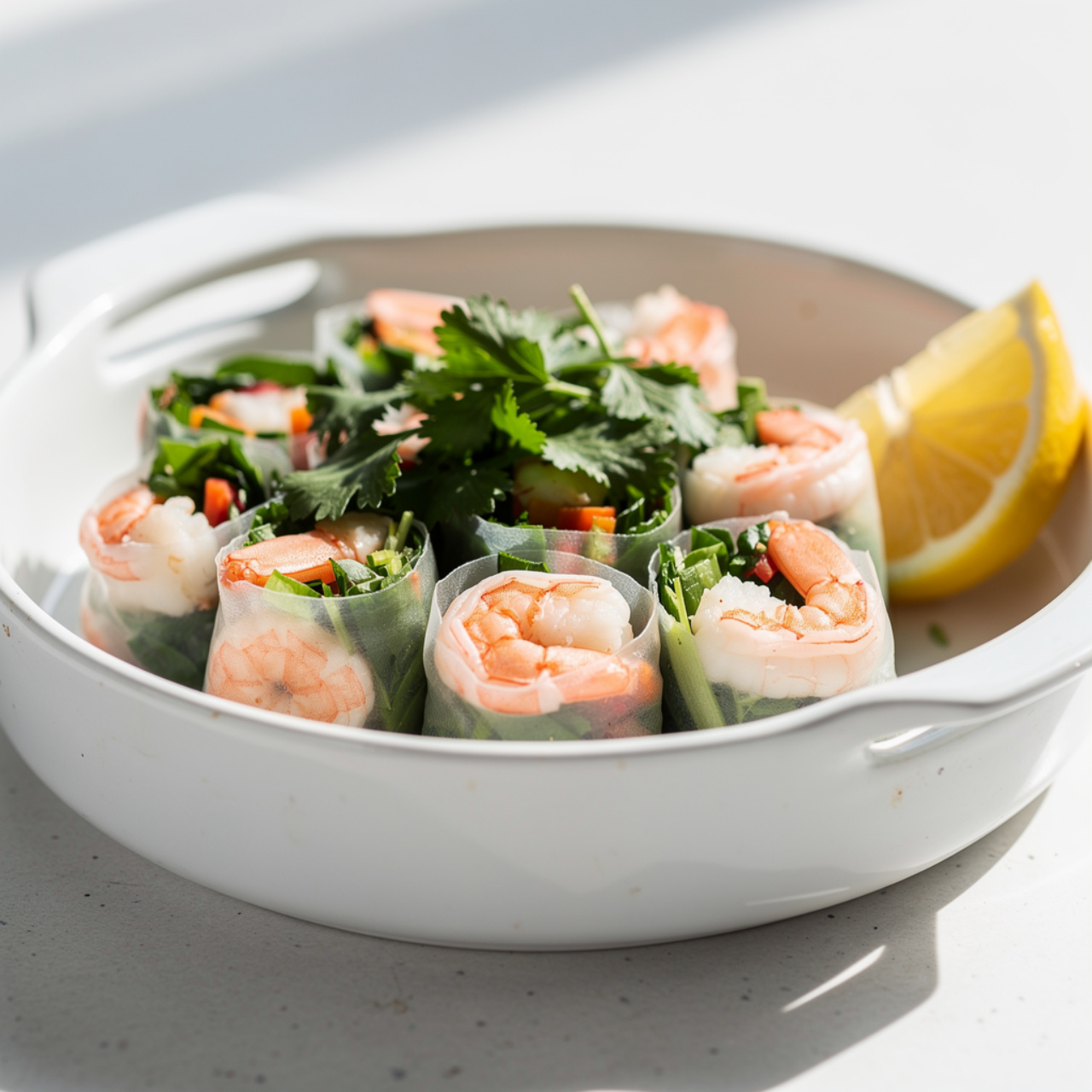
Shrimp Rice Paper Rolls
Fresh, light, and bursting with flavor, these shrimp rice paper rolls are an easy spring rolls recipe perfect for a healthy appetizer or snack.

Fresh, Light, and Totally Addictive Shrimp Rice Paper Rolls
If you have ever scrolled through your favorite Asian cooking accounts and wondered how anyone makes those gorgeous, see through spring rolls at home, today is the day you find out. This shrimp rice paper rolls recipe is one of those magical dishes that looks like a restaurant appetizer but comes together with simple, fresh ingredients and a little bit of rolling practice. Think of it as a build your own sushi recipes homemade experience, minus the rice and the sushi mat.
These rolls are cool, crunchy, herby, and packed with juicy shrimp, all wrapped up in a delicate rice paper shell. They are naturally light, which makes them one of the best easy spring rolls recipe options for warm weather, parties, or anytime you want a snack that feels indulgent but is actually quite good for you.
Before we get cooking, the right tools and ingredients make a real difference here. A wide shallow dish for soaking your wrappers, a sharp knife for clean shrimp halves, and good quality rice paper sheets will make the rolling process so much smoother, especially the first few times you try it.
Why You Will Love This Recipe
This is the kind of recipe that earns a permanent spot in your rotation. Here is why:
- No oven required. Everything comes together on your countertop, which makes it perfect for hot days.
- Naturally gluten free and dairy free, so it fits a wide range of diets without any substitutions.
- Endlessly customizable. Once you get the technique down, you can swap in any veggies, herbs, or proteins you love.
- Great for entertaining. Set up a rolling station and let guests build their own, turning dinner into an interactive experience.
Chef's Tip: Do not over soak your rice paper. It should feel slightly stiff when you pull it from the water, since it will continue to soften as you fill and roll it. Over soaked wrappers tear easily and stick to everything.
Ingredient Notes and Smart Swaps
A few notes to help you shop with confidence. Look for rice paper wrappers in the international aisle of most grocery stores, usually near other rice paper recipes staples like vermicelli noodles and fish sauce. For the shrimp, pre cooked and peeled shrimp saves time, but feel free to poach raw shrimp yourself for extra flavor.
The herbs are where this dish gets its signature brightness, so do not skip the mint and cilantro if you can help it. If you are a fan of Chinese cooking recipes that lean into fresh herbs and crunchy vegetables, you will feel right at home with this combination.
For dipping, the peanut hoisin sauce is classic, but a simple mix of fish sauce, lime, sugar, and chili (often called nuoc cham) is another fantastic, more traditional option if you want to switch things up.
How to Roll Rice Paper Like a Pro
The rolling process is the most intimidating part for first timers, but it becomes second nature after just a couple of tries. The key is working on a slightly damp surface, since this prevents the wrapper from sticking and tearing as you fold.
Keep your fillings compact and avoid overstuffing, especially in the beginning. A roll that is a little smaller but holds together perfectly is far better than a giant roll that splits open the moment you pick it up.
Chef's Tip: If a wrapper tears while rolling, do not panic. Simply lay a second slightly wet wrapper over the torn one and continue rolling. The double layer often goes unnoticed and reinforces the roll.
Ready to make it? Here is the full step-by-step recipe:
Shrimp Rice Paper Rolls
Fresh, light, and bursting with flavor, these shrimp rice paper rolls are an easy spring rolls recipe perfect for a healthy appetizer or snack.
Ingredients
- 12 rice paper wrappers, 8-inch round
- 1 lb shrimp, peeled, deveined, cooked, and halved lengthwise
- 2 oz rice vermicelli noodles, cooked and cooled
- 1 cup carrots, julienned
- 1 cup cucumber, julienned, seeds removed
- 1/2 cup fresh mint leaves, loosely packed
- 1/2 cup fresh cilantro, leaves and tender stems
- 4 butter lettuce leaves, torn to fit wrapper width
- 2 tbsp hoisin sauce, for dipping sauce
- 1 tbsp peanut butter, smooth, for dipping sauce
- 1 tbsp lime juice, freshly squeezed
- 2 tbsp warm water, to thin dipping sauce as needed
Instruction
Set out all your fillings, shrimp, noodles, carrots, cucumber, mint, cilantro, and lettuce, in separate piles within easy reach of your workstation.
Fill a wide, shallow dish with warm water. Dip one rice paper wrapper into the water for about 10 to 15 seconds, until just pliable, then lay it flat on a clean, damp surface.
Arrange a small handful of lettuce, noodles, carrots, and cucumber in a line across the lower third of the wrapper, then top with a few mint and cilantro leaves and 2 to 3 shrimp halves.
Fold the bottom edge of the wrapper up and over the filling, then fold in the sides snugly and roll tightly upward into a cylinder, sealing the edge with light pressure.
Place the finished roll seam side down on a plate lined with a damp paper towel and cover with a second damp towel while you repeat with the remaining wrappers and filling.
For the dipping sauce, whisk together the hoisin sauce, peanut butter, lime juice, and warm water until smooth, adding more water a teaspoon at a time if it is too thick.
Slice each roll in half on a diagonal if desired, and serve immediately with the dipping sauce alongside.
Equipment
- Wide shallow dish for soaking wrappers
- Clean kitchen towels or paper towels
- Sharp knife
- Cutting board
- Small mixing bowl for sauce
Notes
Serving, Storing, and Fun Variations
These shrimp spring rolls are best served immediately while the rice paper is still soft and slightly chewy, paired with that creamy peanut hoisin dipping sauce for dunking. They make a fantastic light lunch, a starter before a bigger Asian inspired meal, or a fun party platter for sharing.
If you want to change things up, try these variations:
- Swap the shrimp for shredded rotisserie chicken or pan seared tofu for a different protein.
- Add thin slices of avocado or mango for extra creaminess and a touch of sweetness.
- Use red cabbage instead of lettuce for a pop of color and extra crunch.
Whether you are deep into a sushi recipes phase, exploring more yummy Asian food, or just looking for a refreshing spring roll recipe to add to your weekly menu, these shrimp rice paper rolls are guaranteed to become a favorite. Grab your ingredients, set up your rolling station, and enjoy every fresh, flavorful bite.